
OEM Mopar Thermostats & Parts


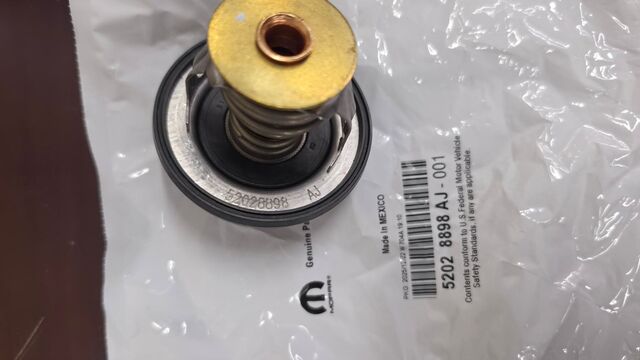
Thermostat

No results found for "Thermostat". Here are some helpful search tips:
- Search by a part name. Example: water pump.
- Be less specific. Example: brake instead of ceramic brake.
- Remove information such as make, year or model.
- Can't find the part you are looking for? Contact us and we'll find it for you!
Genuine Mopar Thermostats and Housings
The short answer: your thermostat is a temperature-controlled valve that keeps coolant away from the radiator until the engine is warm, then opens to hold it in its designed operating range. When it sticks open, you get weak cabin heat, a low gauge reading, and possibly a check-engine light; when it sticks closed, the engine can overheat quickly. Genuine OEM Mopar thermostats, many of which come integrated into a housing, are calibrated for your engine’s specific opening temperature and flow. Use your VIN to find the exact match, and we’ll ship it anywhere in the United States.
Stuck Open or Stuck Closed? Read the Symptoms
A thermostat usually fails in one of two directions, and the symptoms are nearly opposite. Knowing which pattern you’re seeing helps you decide how urgent the repair is.
| Condition | Typical symptoms | Urgency |
|---|---|---|
| Stuck open (or opening too early) | Gauge reads low or takes a long time to warm up; weak heater output, especially in cold weather; reduced fuel economy; possible check-engine light for a coolant temperature or thermostat performance code | Not immediately dangerous, but fix soon; an engine that runs cold wears faster and runs less efficiently |
| Stuck closed (or opening too late) | Temperature gauge climbs quickly, sometimes within minutes; overheating warning; coolant boiling over; upper radiator hose stays cool while the engine is hot | Urgent; stop driving and shut the engine off to avoid engine damage |
| Partially sticking | Temperature swings up and down; heat comes and goes | Diagnose promptly; it can progress to either failure |
| Leaking housing or seal | Coolant smell, wet residue around the housing, low reservoir level | Repair soon; a small leak can grow and lead to overheating |
On many modern vehicles, the engine computer monitors how quickly the engine warms up. If the engine takes too long to reach its expected temperature, it can set a code and turn on the check-engine light. That’s often the first clue to a thermostat stuck open, especially in warmer months when weak heat goes unnoticed.
Overheating warning: if the gauge climbs into the red or a warning appears, pull over safely and turn off the engine. Never open the radiator cap or pressurized coolant reservoir while the engine is hot. Pressurized coolant can cause severe burns.
How a Thermostat Regulates Engine Temperature
Engines are designed to run within a specific temperature range. Too cold, and fuel doesn’t burn as cleanly, oil doesn’t reach its intended viscosity, and emissions and wear increase. Too hot, and gaskets, heads, and pistons risk damage. The thermostat keeps the engine within that range regardless of outside temperature or load.
Most automotive thermostats use a wax pellet sealed in a small metal cup. As coolant warms, the wax melts and expands, pushing a pin that opens the valve against a spring. As coolant cools, the wax contracts, and the spring closes the valve. Here’s how it plays out on a typical drive:
- Cold start: The thermostat is closed. Coolant circulates only through the engine and heater circuit, so the engine warms quickly.
- Warming up: As coolant reaches the thermostat’s rated opening temperature, the valve begins to open.
- Normal operation: The valve opens partially or fully as needed, sending coolant to the radiator to shed heat.
- Changing load: Climbing a grade or towing raises heat, so the thermostat opens wider. Cruising on a cold day may let it close partially.
Some newer engines use electronically controlled thermostats or coolant control valves that let the engine computer adjust temperature for efficiency and performance. These have electrical connectors and can set diagnostic codes when they fail. The opening temperature and design vary by engine, so check your service information rather than assuming any specific value.
The thermostat works as a team with the water pump, which moves coolant, and the radiator and fan, which reject heat. A problem in any one of them can look like a thermostat failure, so diagnosis matters.
Thermostat Housings: Often Replaced Together
The housing is the fitting that holds the thermostat in place and connects it to a coolant hose. On many current Mopar engines, the thermostat and housing are sold as a single assembly, and many of these housings are made of plastic or composite materials.
Plastic housings are light and resist corrosion, but repeated heat cycles can make them brittle over time. Common housing problems include:
- Hairline cracks that seep coolant, often visible as dried crust on or below the housing
- Warping that keeps the seal from holding
- Broken hose necks or mounting ears, sometimes from overtightened bolts or clamps
- Hardened or flattened O-rings and gaskets
When the thermostat is integrated into the housing, replacing the assembly gives you a new valve, seal, and housing at once. Even when they’re separate, it’s common to replace a tired housing, gasket, and nearby hoses and clamps during the same repair. Tighten housing bolts to specification and in the correct order; overtightening is a common cause of cracked housings.
Quick Checks Before You Blame the Thermostat
Several other problems can mimic a failing thermostat. A few simple observations, made safely, help narrow things down before you order parts:
- Check the coolant level cold. Low coolant can cause both overheating and poor heat, and it points to a leak that needs finding regardless.
- Watch the warm-up. A gauge that creeps up slowly and never reaches its usual position suggests a stuck-open thermostat. A gauge that rises unusually fast suggests restricted flow.
- Feel for flow carefully. On a warming engine, the upper radiator hose should become warm once the thermostat opens. Use caution; hoses get hot and the fan can start without warning.
- Confirm the fan works. If the engine overheats only at idle or in traffic, a cooling fan problem is a common culprit.
- Read the codes. A scan tool can show coolant temperature data and any stored codes, which helps separate a thermostat from a faulty temperature sensor.
- Look for contamination. Oily or sludgy coolant can point to a problem elsewhere, such as a leaking oil cooler on engines that use one, or a head gasket issue; that needs professional diagnosis.
If several of these checks point in different directions, a cooling system pressure test and a professional inspection can save you from replacing the wrong part. Sensors and other parts that live in the engine bay are in our engine components section.
What This Category Covers
- Thermostats for gasoline, diesel, and hybrid engines
- Integrated thermostat and housing assemblies
- Thermostat housings, covers, and water outlets
- Electronically controlled thermostats and coolant control valves on equipped engines
- Thermostat gaskets, O-rings, and seals (see also gaskets)
- Coolant temperature sensors and bleed fittings that mount in or near the housing on some engines
For the rest of your cooling repair, browse the complete cooling systems catalog.
Thermostats Across the Mopar Lineup
Chrysler
Chrysler 300 and Pacifica owners in cold climates often notice a stuck-open thermostat first as weak heat. The 300 has been offered with V6 and V8 engines that use different parts, and the Pacifica Hybrid has its own cooling circuits.
Dodge
Dodge Charger, Challenger, and Durango engines include V6 and multiple V8 options. High-output engines manage a lot of heat, and their thermostats are matched to the factory cooling strategy. Avoid substituting a different opening temperature unless the service information specifies it.
Jeep
Jeep vehicles cover V6, turbocharged four-cylinder, V8 on some models, diesel on some, and plug-in hybrid 4xe powertrains. Some designs place the thermostat in a housing that is harder to reach. Off-road and low-speed driving put extra demand on cooling, so a properly functioning thermostat matters.
Ram
Ram 1500 and heavy-duty trucks include V6, V8, and diesel engines, depending on model year. Diesel engines may use multiple thermostats or a different housing arrangement. Trucks used for towing see high sustained loads, which makes the thermostat’s ability to open fully especially important.
Selecting the Correct Thermostat
Thermostats look similar but differ in opening temperature, size, flow, seal, and housing design. Your VIN gives the most reliable match. If shopping by year, model, and trim, confirm:
- Engine: displacement, fuel type, and any hybrid or turbo designation
- Thermostat type: conventional wax pellet or electronically controlled
- Integrated or separate housing
- Gasket or O-ring: included or sold separately
- Number of thermostats on engines that use more than one
Genuine Mopar vs. Aftermarket Thermostats
| Factor | Genuine OEM Mopar | Typical aftermarket |
|---|---|---|
| Opening temperature | Matches the factory calibration your engine computer expects | May differ; some are sold as “cooler” versions that can set codes |
| Housing material and fit | Factory design and sealing surfaces | Quality and dimensions vary |
| Electronic thermostat compatibility | Works with factory controls | May not match connector or control behavior |
| Seal | Factory gasket or O-ring material | May differ in material or fit |
| Warranty | Mopar parts warranty (see terms) | Varies by brand |
A thermostat with a different opening temperature than the factory part can change how the engine computer manages fuel, fan operation, and emissions, and may trigger a check-engine light. Sticking with the OEM calibration keeps everything working as designed.
Replacing a Thermostat Step by Step
Safety note: work only on a cold engine. Hot coolant and pressurized systems can cause serious burns. Keep coolant away from children and pets, and dispose of it properly. If your thermostat is buried under other components, is electronically controlled, or requires a scan tool for bleeding, a professional is recommended.
- Confirm the correct thermostat, housing, and gasket by VIN, and check your owner’s manual for the correct coolant type.
- Let the engine cool completely, then relieve system pressure by slowly opening the reservoir cap.
- Drain coolant below the thermostat level into a clean container.
- Remove any parts blocking access, such as an air intake tube or cover.
- Disconnect the hose from the housing, and unplug any electrical connector.
- Remove the housing bolts and lift off the housing and thermostat.
- Clean the mounting surface carefully without scratching it.
- Install the new thermostat in the correct orientation, with any jiggle valve or bleed hole positioned as the service information shows.
- Install the new gasket or O-ring and housing, then tighten bolts to specification, evenly and without overtightening.
- Reconnect the hose and electrical connector.
- Refill with the correct coolant and bleed air from the system (see below).
- Run the engine, check for leaks, and confirm the gauge reaches normal operating temperature.
Bleeding Air from the Cooling System
Air pockets are the most common reason a new thermostat seems not to work. Trapped air can prevent coolant from reaching the thermostat, cause the engine to overheat, and leave the heater blowing cold. Bleeding procedures vary by vehicle, so always follow your service information. Common methods include:
- Bleed screws or valves: Some engines have bleed points on the housing or hoses; open them while filling until coolant flows without bubbles.
- Vacuum fill: A shop tool pulls a vacuum on the system and then draws coolant in, eliminating most air.
- Run and top off: Run the engine with the heater on, allowing air to work its way out, and top off when cool.
- Scan-tool routine: Some vehicles with electric pumps or valves require a scan-tool routine to circulate coolant through every circuit.
After bleeding, drive for a few days and recheck the coolant level with the engine cold. Small air pockets can work out over time and lower the level slightly.
Thermostats and How You Drive
Daily Driver
For commuters, the thermostat affects comfort as much as reliability: quick warm-up means cabin heat and defrost sooner on cold mornings. A stuck-open thermostat also hurts fuel economy over time.
Towing and Work
Ram trucks and Jeeps pulling trailers need full cooling capacity on grades. A thermostat that doesn’t open fully can cause overheating only under load. Pair cooling system health with a proper towing setup, and stay within rated limits.
Off-Road
Slow crawling, mud packed in the radiator, and high engine load stress the cooling system. Inspect the housing for cracks and keep the radiator clean.
Performance
High-output Dodge and SRT engines rely on carefully calibrated cooling. Keep the factory thermostat, which works with the engine computer’s fan and fuel strategy.
Care and Maintenance
- Use the coolant type in your owner’s manual and don’t mix coolants.
- Replace coolant at the interval in your maintenance schedule; degraded coolant can contribute to corrosion and deposits that affect thermostat operation.
- Inspect plastic housings for cracks or residue during routine service.
- Watch the temperature gauge for changes in warm-up time or operating range.
- Consider replacing the thermostat when replacing a water pump or radiator, since the system is already drained.
Key Takeaways
- The thermostat controls when coolant flows to the radiator, keeping the engine in its designed range.
- Stuck open: poor heat, low gauge reading, and possibly a check-engine light. Stuck closed: overheating.
- Many thermostats are integrated into plastic housings that can crack; replace them together when worn.
- Bleed air from the cooling system after replacement, following your service procedure.
- Use your VIN to order a genuine Mopar thermostat with the factory calibration.
Frequently Asked Questions
Can a bad thermostat cause a check-engine light?
Yes. Many vehicles monitor warm-up time, and a thermostat stuck open can set a code for coolant temperature below the expected range. A scan tool reads the specific code.
Should I remove the thermostat to prevent overheating?
No. Running without a thermostat can make the engine run too cold, may set diagnostic codes, and on some engines can actually disrupt coolant flow and cause hot spots. Replace it with the correct part.
Can I use a lower-temperature thermostat?
It’s best to use the factory-specified thermostat. A different opening temperature can affect engine management, emissions, and heater output, and may trigger warning lights.
Why is my engine still overheating after replacing the thermostat?
Common causes include air trapped in the system, low coolant, a failing water pump, a clogged radiator, a fan problem, or an incorrectly installed thermostat. Check bleeding first.
Why did my plastic thermostat housing crack?
Repeated heat cycles can make plastic brittle over time, and overtightened bolts or clamps add stress. Replace a cracked housing promptly to avoid coolant loss.
Do I need to replace the coolant when changing the thermostat?
You’ll lose some coolant during the job. Refill with the coolant type specified in your owner’s manual. If the coolant is old or due for service, a full flush and refill is a good idea.
How do I know if the thermostat is stuck closed?
Signs include fast overheating and an upper radiator hose that stays relatively cool while the engine is hot. Don’t touch hot hoses carelessly, and have the system checked if you’re unsure.
Why choose a genuine Mopar thermostat?
It matches the factory opening temperature, flow, and housing design, so your engine computer and cooling system work as intended, and it’s backed by the Mopar parts warranty.