
OEM Mopar Wheel Hubs & Bearings
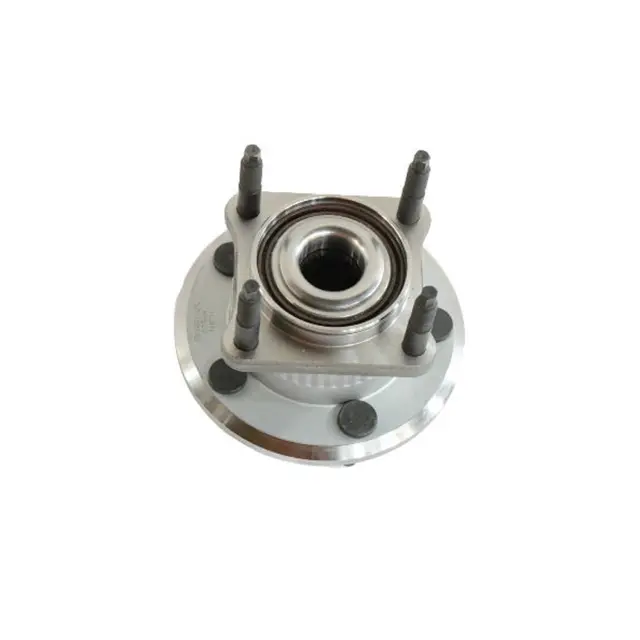

Wheel Hub And Bearing


No results found for "Wheel Hub, Bearing". Here are some helpful search tips:
- Search by a part name. Example: water pump.
- Be less specific. Example: brake instead of ceramic brake.
- Remove information such as make, year or model.
- Can't find the part you are looking for? Contact us and we'll find it for you!
Mopar Wheel Hubs and Bearings Built to Factory Spec
The short answer: a growl or hum that gets louder with speed and changes as you steer is the classic sign of a failing wheel bearing, and on most modern Chrysler, Dodge, Jeep, and Ram vehicles the fix is a complete hub assembly that bolts to the knuckle with the bearing, flange, and often the ABS sensor ring built in. Genuine OEM Mopar hubs and bearings match your vehicle’s bolt pattern, spline count, and wheel speed sensor design, so the brakes, stability control, and four-wheel-drive system keep working as intended. Enter your VIN to confirm the right part, and we’ll ship it to you anywhere in the country.
Is It Your Wheel Bearing? Recognizing the Symptoms
Wheel bearings rarely fail suddenly. They usually announce themselves with noise weeks or months before they become dangerous, which gives you time to act if you know what to listen for.
| Symptom | How it typically presents | Why it happens |
|---|---|---|
| Growl, hum, or roar | Rises with road speed, not engine speed; often mistaken for tire noise | Pitted or worn rolling elements and races |
| Noise changes when steering | Gets louder or quieter as you sweep gently left and right on the highway | Cornering shifts load onto or off the failing bearing |
| Play in the wheel | Wheel rocks when gripped at top and bottom with the vehicle raised | Internal wear has created clearance |
| ABS or traction control light | Warning lamp on, sometimes with stability control disabled | Damaged sensor ring, excess play, or a failed integrated sensor |
| Grinding or clicking | Rough feel or noise at low speed or while turning | Advanced bearing damage |
| Vibration | Felt in the steering wheel or floor | Bearing roughness, though tires and brakes can cause similar feel |
| Uneven brake pad wear | One side wears faster than the other | Bearing play can push pads away from the rotor |
A useful road test: on an empty, straight road at a steady speed, gently weave. If the noise grows when you steer one direction, the bearing being loaded more is often on the opposite side, because weight shifts to the outside of the turn. Tire tread noise can mimic a bad bearing, so a technician may also spin the wheel by hand on a lift to feel for roughness.
How Wheel Hubs and Bearings Work
Every wheel spins on a bearing: a set of hardened balls or tapered rollers running between precision-ground races. The bearing carries the weight of the vehicle, handles side loads in corners, and lets the wheel turn with little friction. The hub is the flange the wheel and brake rotor mount to, with studs pressed in for the wheel lugs. On driven wheels, the hub also has internal splines that engage the axle shaft or CV joint to transmit power.
Modern sealed bearings are lubricated for life and can’t be greased. Once the seal fails and water or grit gets in, the bearing surfaces start to pit and the noise begins. Impacts from potholes, curbs, or off-road obstacles can also dent the races internally, which may start the wear process long before the bearing would otherwise wear out.
Hub Assemblies vs. Pressed Bearings
Mopar vehicles use two main designs, and knowing which one you have affects the parts you buy and how hard the job is.
| Design | How it’s built | Replacement |
|---|---|---|
| Hub and bearing assembly (unit bearing) | Bearing, hub flange, and often the sensor ring or sensor come as one sealed unit that bolts to the knuckle or axle | Unbolt and replace as a unit; generally DIY-friendly with basic tools |
| Pressed-in bearing | Cartridge bearing pressed into the knuckle, with a separate hub pressed through it | Requires a hydraulic press or special tools, or removing the knuckle; often best left to a shop |
Most current trucks and SUVs in the Mopar lineup use bolt-on hub assemblies at the front, while some cars and crossovers use pressed bearings at one or both axles. Your VIN tells us which design you have. On rear-wheel-drive solid rear axles, the axle shaft bearing is usually a separate component inside the axle tube, which is a different repair altogether.
The ABS and Wheel Speed Sensor Connection
Your anti-lock brakes, traction control, stability control, and in many cases the four-wheel-drive and driver assistance systems all rely on wheel speed sensors. Each sensor reads a toothed or magnetic encoder ring that turns with the hub. On many Mopar vehicles, that encoder is built into the hub bearing assembly, and on some the sensor itself is part of the hub.
This tie-in matters in three ways:
- Diagnostics: An ABS warning light can come from a bad sensor, damaged wiring, or a worn bearing whose play disrupts the signal. A scan tool helps sort out which wheel is reporting a problem.
- Part matching: Some hubs use a magnetic encoder that only works in one orientation or with a specific sensor type. An incorrect replacement may trigger warnings even if it bolts on.
- Handling: Keep metal debris away from magnetic encoders, and route sensor wiring exactly as it was so it isn’t pinched or stretched by suspension travel.
When replacing a hub with a separate sensor, inspect the sensor and its connector, and consider replacing a sensor that is corroded or seized in the old hub.
Four-Wheel-Drive Front Hubs
On 4x4 Jeep and Ram models, the front hubs transmit engine torque, not just support weight. The axle shaft passes through the hub and engages internal splines, and the hub may be retained by a large axle nut. This means:
- The spline count and shaft design must match your axle exactly.
- The hub can wear from both rotation and driveline loads, especially with larger tires or frequent four-wheel-drive use.
- Some systems use axle disconnects or other features that work with the hubs and axle; these vary by model and year, so check your service information.
- Seized hubs are common in salt-belt regions and on trucks that ford water, making removal harder than on a two-wheel-drive vehicle.
Wrangler JK and JL, Gladiator JT, Ram 1500 4x4, and Ram 2500 and 3500 4x4 front hubs are all different. Some front hubs also differ between axle options on the same model. Always confirm by VIN.
What You’ll Find in This Category
- Front and rear hub and bearing assemblies
- Pressed-in wheel bearings and separate hub flanges
- Axle shaft bearings and seals for solid rear axles
- Wheel speed sensors and related wiring, where sold separately
- Axle nuts, hub bolts, retainers, and dust shields
- Wheel studs and related hardware
While you’re replacing a hub, it’s often a good time to inspect your rotors and brake hardware and brake calipers, since they come off during the job anyway.
Wheel Hubs and Bearings by Mopar Brand
Chrysler
The Chrysler 300 and Pacifica carry a lot of weight on their bearings, and a minivan loaded with passengers and cargo exposes a weak bearing quickly. AWD versions use different front hubs than two-wheel-drive versions, because the front axles are driven.
Dodge
Dodge Charger, Challenger, and Durango hubs differ by drivetrain and, on some models, by brake package, since larger brakes can change the hub or rotor mounting. Performance models put high cornering loads on bearings, so worn ones quickly affect steering precision.
Jeep
Wrangler and Gladiator owners who run larger tires or wheel off-road tend to wear front hubs faster because of leverage and water exposure. Grand Cherokee, Cherokee, Compass, and Renegade use independent designs with their own hubs, and 4x4 versions differ from 2WD ones.
Ram
Ram 1500 hubs vary by 2WD or 4WD and model year. Heavy-duty Ram 2500 and 3500 trucks use large front hub assemblies built for heavy loads, and dual-rear-wheel models use their own rear hub and axle components. Diesel engines and plows add front-end weight, which shortens bearing life.
Choosing the Correct Hub or Bearing
Your VIN decodes most of what matters, but if you shop by year, model, and trim, verify:
- Front or rear position, and whether left and right sides differ
- Drivetrain: 2WD, 4WD, AWD, or RWD
- Axle type on trucks and Jeeps
- Brake package, which may change hub dimensions
- ABS sensor style: integrated sensor, encoder ring only, or separate sensor
- Single or dual rear wheels on Ram HD trucks
OEM Mopar vs. Aftermarket Hubs and Bearings
| Point of comparison | Genuine OEM Mopar | Typical aftermarket |
|---|---|---|
| Sensor compatibility | Matches the factory ABS encoder and sensor design | Sensor design may differ; can trigger warnings |
| Bearing quality | Built to the factory load and sealing specification | Ranges from comparable to noticeably lower |
| Fitment | Exact bolt pattern, pilot, and spline match by VIN | May fit several applications with minor differences |
| Studs and flange | Factory stud spec and flange runout | Variable; excess runout can cause brake pulsation |
| Warranty | Mopar parts warranty (see terms) | Varies by brand |
What Shortens Bearing Life
Most bearings outlast many other chassis parts, but certain conditions speed up wear. Knowing them helps you decide when to inspect more often:
- Impacts: Hard pothole or curb hits can mark the internal races, starting noise months later.
- Water intrusion: Deep water, pressure washing aimed at the hub seal, and road salt all attack seals.
- Larger, heavier wheels and tires: More leverage on the bearing, especially with wheels that push the tire farther outboard than stock.
- Improper installation: Hammering on a hub, overtightening or undertightening axle nuts, or uneven lug torque.
- Extra weight: Plows, winches, heavy bumpers, and sustained loads at or near the vehicle’s limits.
If you’ve changed to aftermarket wheels with a different offset, consider that the bearing may now be working harder than its original design assumed.
Hubs and Bearings for How You Use Your Vehicle
Daily Driver
For everyday driving, the main goals are quiet operation and reliable ABS function. Replace a noisy bearing promptly; it won’t fix itself, and it’s easier to schedule before it gets worse.
Towing and Work
Towing and hauling add load to every bearing. On Ram trucks used for work, inspect hubs more often, and be cautious after driving through deep water, since water can get past seals. Check your towing setup to stay within your truck’s ratings.
Off-Road
Jeep owners running larger tires should expect faster front hub wear. After water crossings or mud, listen carefully for new noises. Carrying a spare hub on long trips is a common practice among overlanders.
Performance
On Dodge performance models, bearings handle heavy cornering and braking loads. A bearing with play can affect steering precision and pedal feel. OEM parts keep the hub stiffness and runout the car was designed with.
Step-by-Step: Replacing a Bolt-On Hub Assembly
Safety note: wheel bearings and hubs are safety-critical. Use rated jack stands, and follow the torque specifications for axle nuts, hub bolts, caliper brackets, and lug nuts in your service information. Pressed-in bearings, seized 4x4 hubs, and anything involving axle shafts on heavy-duty trucks often require special tools; a professional is recommended in those cases.
- Confirm the correct hub by VIN and compare it to the old one before installing.
- Loosen the axle nut (on driven wheels) and lug nuts while the vehicle is on the ground.
- Raise and support the vehicle on jack stands and remove the wheel.
- Remove the brake caliper and bracket and hang them with wire; don’t let the caliper hang by its hose.
- Remove the rotor.
- Unplug and remove the wheel speed sensor if it’s separate, or disconnect the integrated sensor connector.
- Remove the axle nut, then the hub mounting bolts.
- Remove the old hub; a puller may be needed if it’s corroded in place.
- Clean the mounting surface thoroughly so the new hub seats flat.
- Install the new hub and tighten the bolts to specification.
- Reinstall the sensor, wiring, rotor, caliper, axle nut, and wheel, tightening all fasteners to specification.
- Pump the brake pedal before driving, then road test and confirm that no warning lights are on.
Care and Maintenance
- Listen for new noises after potholes, curb strikes, or off-road trips.
- Avoid using an impact wrench to tighten axle nuts, which can damage bearings.
- Have hubs checked if you notice uneven brake pad wear or a pulsating pedal.
- Keep wheels balanced and lug nuts properly torqued; uneven torque can distort rotors and stress hubs.
- Rinse mud and salt from the hub area after trail or winter driving.
- Inspect related parts like tie rods and control arms, since looseness in either can mimic or mask bearing play.
Key Takeaways
- A growl or hum that changes with speed and steering usually points to a wheel bearing.
- Most Mopar trucks and SUVs use bolt-on hub assemblies; some cars and crossovers use pressed bearings.
- Hubs often contain the ABS encoder or sensor, so the correct part keeps stability systems working.
- 4x4 front hubs must match the axle shaft splines exactly.
- Follow factory torque specs and use genuine Mopar parts matched to your VIN.
Frequently Asked Questions
How long can I drive on a bad wheel bearing?
There’s no safe number. A noisy bearing may last for a while, but as it deteriorates it can get hot, develop excess play, and, in severe cases, fail. Have it replaced soon after you notice symptoms.
Should I replace wheel bearings in pairs?
It’s not required. Bearings wear independently, and replacing only the noisy one is common. Some owners replace both sides on high-mileage vehicles for convenience.
Can a bad wheel bearing cause the ABS light to come on?
Yes. On many vehicles the ABS encoder is part of the hub, and excess play or damage can disrupt the wheel speed signal. A scan tool can help identify which wheel is affected.
Do I need an alignment after replacing a hub?
Usually not for a bolt-on hub, since it doesn’t change suspension geometry. If you removed steering or suspension parts to do the job, or the vehicle pulls afterward, have the alignment checked.
How do I tell a bad bearing from tire noise?
Tire noise often changes with road surface, while bearing noise usually changes when you steer. Inspect the tires for cupping; if they look normal and the noise still changes with steering, the bearing is a likely cause.
Are 2WD and 4WD hubs interchangeable?
No. 4WD front hubs have splines for the axle shaft, while 2WD hubs usually don’t. Order by VIN to make sure the hub matches your drivetrain.
Why choose genuine Mopar hubs?
OEM hubs match factory dimensions, ABS components, and bearing specifications for your vehicle. That helps avoid warning lights, noise, and early failure, and they’re backed by the Mopar parts warranty.
Explore the full suspension and steering category to find everything for your front-end repair.